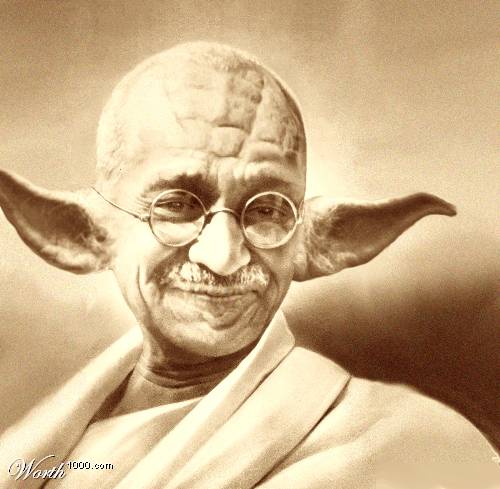
Interesting paper-
Defusing a Google Bomb
STEVEN J. HOROWITZ
Harvard University - Harvard Law School
Yale Law Journal Pocket Part, Vol. 117, 2007
Abstract:
Anonymous internet defamation is nothing new, but the recent Autoadmit controversy highlights one particularly difficult aspect of this problem: Google bombing. As private individuals are defamed on popular anonymous message boards, searches on Google and other engines return the defamatory posts as top hits for those individuals. This short essay suggests a notice and takedown solution modeled after the DMCA's similar provisions. I argue that such a solution is much more effective for the Google bomb problem than for copyright infringement because the parties involved are much more likely to have similar legal resources than in copyright disputes.
Wednesday, September 05, 2007
Inside the Googleplex
The Economist writes-
"It is rare for a company to dominate its industry while claiming not to be motivated by money. Google does. But it has yet to face a crisis."
This is the interesting part-
"Google's success still comes from one main source: the small text ads placed next to its search results and on other web pages. The advertisers pay only when consumers click on those ads. 'All that money comes 50 cents at a time,' says Hal Varian, Google's chief economist. For this success to continue, several things need to happen.
First, Google's share of web searches must remain stable. Thanks to its brand, this looks manageable. Google's share has steadily increased over the years. It was about 64% in America in July, according to Hitwise. That is almost three times the volume of its nearest rival, Yahoo!. In parts of Europe, India and Latin America, Google's share is even higher. Only in South Korea, Japan, China, Russia and the Czech Republic does it trail local incumbents.
Second, Google must maintain or improve the efficiency with which it puts ads next to searches. And here its dominance is most impressive. In a recent analysis by Alan Rimm-Kaufman, a marketing consultant, it took a whopping 73% of the budgets of companies that advertise on search engines (versus 21% and 6%, respectively, for Yahoo! and Microsoft). It charged more for each click, thanks to its bigger network of advertisers and more competitive online auctions. And it had far higher “click-through rates”, because it made these ads more relevant and useful, so that web users click on them more often."
GMail Videos Get Unbelievable View Numbers
GMail Behind the Scenes (Final Cut)
GMail Theater: Why Use Gmail
Shrimponomics
The Freakonomics blog asks the question-
“Why are we eating so much shrimp?” Apparently, the per-capita shrimp consumption has tripled from 1980 to 2005. The answer- "A key factor is that prices have dropped sharply."
Duh!
Marketing Words of Wisdom
Lars Perner has an excellent list of words of wisdom. Here is a sample-
Even if it ain't broke, preventive maintenance may still be cost-effective.
Market share, unlike body weight, is very difficult to gain and very easy to lose.
Being normal (of necessity) is not a badge of distinction.
A conscience, though an invaluable asset, can be a very expensive thing to have.
Consumers frequently make very reasonable evaluations of the relative merits of apples and oranges--how else could they choose between the two?
Verbosity is my business.
Facts without context are rarely meaningful.
Where there is no gain without pain, one should attempt to maximize the gain-to-pain ratio.
Segmentation is the cornerstone of marketing.
It is better to learn by adaptation than by imitation.
Though almost invariably less sweet, reviewers do resemble a box of chocolates in the sense that you never know what you are going to get.
No amount of reasoning is going to provide a definitive answer to an empirical question.
Assumptions kill.
Tuesday, September 04, 2007
Wall Street Journal quotes me!
The Wall Street Journal had a story about voluntary pricing at small eateries such as Terra Bite. Yours truly was quoted. Here is the exact quote-
"You can encourage people to donate as much as they want," says Sandeep
Krishnamurthy, associate professor of e-commerce and marketing at the University of
Washington at Bothell campus. "And if you do that to the right audience in the right
way ... what ends up happening is that you save money [by not having to invest in a
large, paid staff or credit-card services] and people feel good that you're trusting them
so much. And I think you're going to end up seeing people giving good sums of
money."
Pecha Kucha
Dan Pink has a new meme- Pecha Kucha. Use it at the next meeting- "Emotionally intelligent signage".
US Open
I was watching the match between Blake and Haas yesterday. It was an instant classic.
The New York Times put it best-
The New York Times put it best-
They tested each other’s will for more than three hours yesterday afternoon at the United States Open, in a match that held more plot twists than a Shakespearean tragedy, but now Tommy Haas and James Blake stood at the net and waited for the instant replay to determine how it would end.
The two men, whose lives have featured far tougher hurdles than that moment, looked at each other in helpless empathy. When the final call ruled Haas’s serve an ace, they could do little but share a warm handshake and endure their opposing emotions. Blake, seeded sixth, absorbed another heartbreaking five-set loss at Arthur Ashe Stadium, in a tournament he considers home. Haas, the 10th seed, reveled in an unlikely triumph.
“Anytime you play such a close match, you’re out there for over three hours, that’s the one thing in tennis, you’re pretty much by yourself afterwards,” Haas said. “When you have to deal with the loss, it’s tough. Obviously for the winner, it’s always such a great feeling.”
Haas’s 4-6, 6-4, 3-6, 6-0, 7-6 (4) victory sent him to the quarterfinals, where he will face the man who beat him in that round last year, Nikolay Davydenko of Russia.Monday, July 10, 2006
Sunday, March 26, 2006
Neuromarketing
On Advertising: Better ads with MRIs?
Eric Pfanner International Herald Tribune
SUNDAY, MARCH 26, 2006
A television advertisement set to appear in France next week spoofs one of the memorable moments in French politics, when President Valéry Giscard d'Estaing, having been defeated by his Socialist challenger, François Mitterrand, bid the nation farewell in a solemn television address in 1981. At the end of his speech, Giscard intoned a funereal "au revoir" and strode away melodramatically as the cameras lingered on his empty desk.
In the ad, an actor with the number 12 emblazoned on his shirt mimics Giscard, saying goodbye and walking away. After a few seconds of silence, a pair of wacky characters in curly wigs and 1980's-style aerobics outfits bound onto the scene, displaying the numbers 118 and 218.
They represent a new directory assistance service reached by dialing 118-218, one of several challengers to France Télécom's service, which has long been accessible via the number 12. As of April 3, that number will no longer be valid, as France joins other European countries in deregulating directory assistance.
At a time when protesters are taking to the streets of Paris over a proposed employment law and politicians are posturing before presidential elections next year, the lighthearted satire seems timely. But there are other reasons that, from a marketing perspective, the ad presses the right buttons.
The spot, the latest installment in an introductory campaign for the 118-218 service, which is owned by a subsidiary of Infonxx, a U.S.-based company, embraces ideas gleaned from scientifically studying how the brain responds to advertising messages. Marketing experts are paying increasing attention to such neuromarketing as researchers employ more sophisticated tools, including functional magnetic resonance imaging, or functional MRI.
Gemma Calvert, co-founder and managing director of Neurosense, a neuromarketing firm in Oxford, England, said science can provide insights that cannot be matched through conventional marketing research methods like focus groups. Those panels, often convened by marketers seeking feedback on new products or ad campaigns, are easily tainted by group dynamics or by leading questions, she said.
"What you really want to do is look inside the black box and find out what is actually happening in the brain," she said. "This technique gets at insights that focus groups can't begin to explain."
One disciple is Robin Wight, chairman of the London-based ad agency WCRS, which developed a British advertising campaign that served as a template for the Giscard ad and other French spots promoting 118-218. The British campaign has run since 2002, when it introduced the British equivalent of 118-218, which is reached via the number 118-118 in Britain.
The British ads, initially featuring a pair of long-distance runners in cheesy 1970s' getups - flowing wigs, droopy mustaches and high- riding shorts - have been enormously successful, helping 118-118 carve out a market share of more than 40 percent. It bypassed the former monopoly, BT, when its service under the number 192 was switched off in 2003. Though BT now offers directory assistance under the number 118-500, it still trails the newcomer.
How did 118-118 do it, and how does neuromarketing play into it? While the company's ad agencies did not run functional MRIs on consumers, they did employ ideas gleaned from such studies.
"It's not easy getting into people's minds," said Chris Moss, European chairman of the Infonxx unit that runs 118-118, 118-218 and a similar service in Italy. "People never like to learn new numbers, but you can train them to do so if you personalize the numbers. People always remember a person before they remember a number."
To make sure that consumers associated its numbers with faces, WCRS ensured that its runner behaved in an attention-grabbing - some might say annoying - manner. In the TV spots, the runners pranced around in a variety of places, escorting an aging actor bearing the 192 number into retirement.
The British campaign, planned by another agency, Naked Communications, was extended into the real world, with the 118-118 actors appearing in shopping malls and at sporting events. To jog the brain into remembering that the sequence of numbers consisted of two equal parts - 118 and 118 - the two actors appeared to be twins, another powerful mnemonic device.
The campaign eventually became a pop-culture phenomenon, with consumers doing free advertising - dressing up as the 118 runners for costume parties, for example.
In the French campaign, created by Agence V, a subsidiary of Omnicom Group's DDB division, similar tactics were employed. French regulators, having seen that the 118-118 number provided an unfair competitive advantage because of its mnemonic nature, decided not to award that sequence to any of the companies seeking to operate directory assistance.But Infonxx acquired 118-218 in a lottery and modified its campaign accordingly.
Instead of playing identical twin runners, the French actors appear slightly different - one blond, the other dark-haired - but they are similarly dressed, and constantly repeat the numbers they wear on their chests. In an effort to capitalize on the brain's positive associations with nostalgia, some of the spots in which they appear are a sendup of a 1980s' television fitness show, "Gym Tonic," which was hosted by a pair of aerobics instructors.
Wight of WCRS said the success of the campaign in Britain could have implications for many advertising problems. Many advertisers are worried about a loss of effectiveness from television advertising, for instance, as viewers increasingly use digital video recorders to fast-forward through the ads in shows. Neuromarketing research suggests that even ads seen in fast-forward mode can leave an imprint in the brain, since few consumers give advertising their undivided attention in the first place.
Are all of these mind games fair play? Or is neuromarketing an insidious way for advertisers to manipulate consumers into buying things they don't need?
Calvert said neuromarketing can aid consumers by ensuring that marketers understand what they really want.
"Because so much money is being lost in marketing, people are being called to account," she said. "This is a way to provide some of that accountability."
Eric Pfanner can be reached at adcol@iht.com.
Google has lost its way.
Google Finance is a sure sign that Google has lost its way. The service is really really bad. For instance, look what happens when I do a search on "Google Yahoo". Now, why I am getting information about Infousa and Taos Mountain, Inc.?
Something is wrong with Google. The company known for its razor-sharp focus is now becoming known for ...? Google is starting to look like Yahoo lite and that should scare people.
Friday, January 20, 2006
Monday, August 08, 2005
Google shuts off C|Net because it used information available through Google searches!
Google's Chief Is Googled, to the Company's Displeasure
*
E-Mail This
* Printer-Friendly
* Reprints
By SAUL HANSELL
Published: August 8, 2005
Google says its mission is "to organize the world's information and make it universally accessible and useful." But it does not appear to take kindly to those who use its search engine to organize and publish information about its own executives.
CNETNews.com, a technology news Web site, said last week that Google had told it that the company would not answer any questions from CNET's reporters until July 2006. The move came after CNET published an article last month that discussed how the Google search engine can uncover personal information and that raised questions about what information Google collects about its users.
The article, by Elinor Mills, a CNET staff writer, gave several examples of information about Google's chief executive, Eric E. Schmidt, that could be gleaned from the search engine. These included that his shares in the company were worth $1.5 billion, that he lived in Atherton, Calif., that he was the host of a $10,000-a-plate fund-raiser for Al Gore's presidential campaign and that he was a pilot.
After the article appeared, David Krane, Google's director of public relations, called CNET editors to complain, said Jai Singh, the editor in chief of CNETNews.com. "They were unhappy about the fact we used Schmidt's private information in our story," Mr. Singh said. "Our view is what we published was all public information, and we actually used their own product to find it."
He said Mr. Krane called back to say that Google would not speak to any reporter from CNET for a year.
In an instant-message interview, Mr. Krane said, "You can put us down for a 'no comment.' "
When asked if Google had any objection to the reprinting of the information about Mr. Schmidt in this article, Mr. Krane replied that it did not.
Mr. Singh, who has worked in technology news for more than two decades, said he could not recall a similar situation. "Sometimes a company is ticked off and won't talk to a reporter for a bit," he said, "but I've never seen a company not talk to a whole news organization." SAUL HANSELL
Friday, July 08, 2005
Developers, Developers, Developers vs. Customers, Customers, Customers.
Steve Ballmer is on Channel 9- at last! Once again, he spouted his mantra- "developers, developers, developers". He said that "it was about building things".
You know what? It is not. It is about "customers, customers, customers". I think Google gets that and Microsoft does not. In fact, I would argue that this is going to be the fundamental difference between Google and Microsoft. Google realizes that it is about building cool apps, of course. But, not just cool apps for cool apps sake. It is about cool apps that customers will use. It is about changing how individuals interact with software and process information. Yes, developers build that stuff and you cannot have a software company without developers. But, you know what? You cannot have a software company without customers either.
The funny thing is just yelling "developers, developers, developers" does not get these guys to your side. The cool apps part is a better way of attracting developers.
In Ballmer's world, it is about selling to enterprises and then hiring developers to do the grunt work. The individual customers gets what the enterprises want and not necessarily what is in their best interest. On the other hand, in Google's world, innovation is designed for the little guy and the big guy gets to use similar stuff as well.
Which is better? Only time will tell.
Friday, June 03, 2005
Keepers of the Hive
From ESPN, no less!
By Amar Shah
Special to Page 2
With their Harry Potter spectacles, floppy black mops of hair and bookish personas, they look exactly like a younger version of me. The similarities are eerie.
Nitish Lakhanpal, Sameer Mishra, Nilesh K. Raval, Arjun R. Modi, Krunal Shaval, Aravind Arun, Saptarshi Chaudhuri, Midhat Patel and Nikhil B. Koganti are probably my adolescent doppelgangers, except they can spell "tintinnabulary," and I can merely look it up in a dictionary.
The nine who resemble me joined 264 other participants in the 78th annual Scripps Howard Spelling Bee in Washington on Wednesday and Thursday. But the group is also part of a niche demographic that has dominated the event over the past seven years. Indian-Americans are the New England Patriots of spelling bees, having won five of the last seven competitions, including newly crowned 2005 champion Anurag Kashyap of San Diego.
Although representing less than 1 percent of the U.S. population, Indian-Americans made up around 15 percent of last year's participants. This year's spelling bee continued the trend, as 31 competitors of Indian origin (according to rediff.com, an Indian news portal) vied for the coveted title of the nation's best speller. Seven of the 17 contestants from Texas were Indian-American, and Puerto Rico's lone representative was none other than Arun.
Around the globe, the Indian spelling acumen is spreading. Across the pond, Gayathri Kumar, 13, beat out 100,000 competitors to win the BBC's Hard Spell competition, England's version of the spelling bee. Indeed, it's a global affair.
As a kid, I learned all the stereotypes about my culture. We were the studious, intellectual sorts, who excelled in math and science. (A lot of good that did me. My mathematical exploits ended after I failed pre-calculus three times.) We owned convenience stores and motels, and populated medical schools with future Dr. Patels. Some truth exists in the last generalization. My dad earned a living as the Godfather of Gas, the hospitality industry is run by an Indian motel cartel, and the lady who delivered me was named Dr. Patel.
Now a slice of original Americana, the spelling bee, is our domain of excellence, but I wonder why?
I participated in my first and last spelling bee in second grade, when my teacher, Sister Noreen, asked me to spell "knowledge." I stammered and missed the word on the first letter. I started my attempt with an "n," and my future as a spelling master ended. I retired … at age 7.
Later, I learned the value of the silent "K," but my ambition to be a splendid speller gradually dissipated with my youthful dreams of a Knicks championship and a fantasy Natalie Portman wedding. The best way for me to rest my alphabetical demons and to understand the cultural quirk of Indians in the spelling bee was to track down an individual who had experienced the grueling, crazy world of bee season and conquered it.
Nupur Lala won the 1999 national spelling bee when she correctly spelled "logorrhea." She is, also, the quietly driven starlet of "Spellbound," the delightful Oscar-nominated documentary that pushed the bizarre, whimsical world of spellers into the mainstream of pop culture.
She was in class the day I called her home in Arkansas, just a few days before the 2005 spelling bee would begin. Her dad answered and took a message. Nupur called me back in 15 minutes. I sent her a small list of questions by e-mail, and the next morning I received a college thesis in my in-box. Although she claims to use only 5 percent of the words she studied, I know she's being modest. Anyone who uses words like "inculcate" and "serendipitously" in everyday life, automatically draws envy.
The first question I posed was why are there so many Indian-American contestants in the spelling bee.
"The tradition of education in Indian households is a very strong one, and children are encouraged to test their academic boundaries and to strive to fulfill their potential from when they are very young," Nupur wrote back. "A distinct advantage ceded to Indian children is that the first wave of Indian immigrants who came to this country went to schools where the primary language of instruction was English. Most Indian spellers are children of these parents, and it helps to have a coach at home who can read words to you at any time."
Parental help is one thing. Parental pressure is another.
Neil Kadakia, the other Indian kid portrayed in "Spellbound," had a father whom A.O. Scott from the New York Times described as the "closest thing in the movie to a classic stage parent, pushing his son through a regimen of tutors, drills and meditation." Neil spelled 7,000 to 8,000 words a day as his father drilled him like some Vince Lombardi drunk on the dictionary. Neil also had the burden of a relative who paid 1,000 people in India to chant his name. Also, his dad pledged to provide 5,000 hungry people a free meal if Neil won. He didn't.
Last year, Akshay Baddiga collapsed while spelling "alopecoid." He got up and recovered to spell the word correctly. His brother Praytush won the competition in 2002, and Akshay finished as runner-up in 2004. Talk about pressure.
MORE SPELLING BEE MADNESS
Page 2 is all over the 2005 Scripps Howard Spelling Bee, including our first-ever fantasy draft from among the 273 participants. Plus, we've got Darren Rovell's guide to picking the Spelling Bee winner, and Sportoon's take on the competition.
I asked Nupur's mom, Meena, about the way she handled Nupur's spelling career. "Most parents were not as pushy as the Kadakias – maybe one or two," Meena said in a phone interview. "Most were happy for just getting to the nationals."
Nupur said her parents encouraged her to read by filling the house with books.
"My parents were always supportive of my spelling bee endeavors," Nupur wrote. "My parents did always remind me though that my schoolwork was first priority and then spelling bees. I clearly recall being close to tears after missing 80 percent of a word list, and my mother reminding me, 'Nupur, there's more to life than spelling bees. Don't sweat it so much.' My dad didn't even want me to compete again, thinking that I should perhaps try something new or that the pressure was too much."
Nupur says athletics are not given a high priority in Indian culture, making it unlikely Indian parents would teach their children the mid-range jumper or how to hit a curveball. They hit the books, not the weights.
"Indian parents see this as a prime opportunity for their children to learn the benefits of competition in an arena where it's not necessarily the fastest or biggest kid who will be the winner and where nothing but sheer hard work will bring you success," Nupur said.
Three-time Spelling Bee participant and this year's runner-up, 11-year-old Samir Patel feels the same way. "I used to want to play football," said the 4-foot-8 Patel in a Knight-Ridder interview. "But look at me. I am way too short to play in the pros."
It has been 20 years since the first Indian-American, Balu Natarajan, won the national spelling bee. Natarajan is now the team physician for the Chicago Fire of the MLS.
Nupur Lala is an incoming junior at the University of Michigan. At 20, she doesn't know what path she wants to take. She's torn between economics and microbiology. But she left me with this bit of wisdom:
"When one delves into the English language, there are so many repeating patterns and a few derivations that underlie so many of the same words. Many spellers have inculcated in them a strong love of reading and language, and this is a trait that crosses all boundaries of ethnicity and nationality at the National Bee."
Nupur and her mom planned to watch this year's competition. And after Marshall Winchester went down on the word "sarang" in the 11th round, the National Spelling Bee became an all-Indian Final Four, featuring Rajiv Tarigopula, Aliya Deri, Anurag Kashyap, who also wore glasses, and Samir Patel.
The four contestants spelled again and again until the 14th round when Rajiv stumbled on "odyllic." And then there were three, the first time ever that three contestants went past the 15th round. The next rounds were a battle of word supremacy, and Samir Patel enjoyed the revelry of competition. He brimmed with confidence and seemed to play with the judges when they asked him to spell "onnychopagy.' He knew the meaning before they did, asking the judges with almost a coy wink. The word meant the habit of nailbiting.
In the 18th round Aliya Deri, who loved Indian dance, misspelled "trouvaille." The crowd applauded her efforts with a standing ovation. The exuberant Samir was given the word "Roscian," and in stunning upset missed it when he used an extra "s" instead of "c." It was Anurag's turn, and the bespectacted, braced word wonder from San Diego, spelled 'appoggiatura', which meant a tone to support an essential note of a melody.
It was the harmonious word of victory.
Amar Shah works as a production assistant for ESPN's SportsCenter.
Wednesday, May 11, 2005
Puzzles from IIT,Bombay Alumni Newsletter.
I just saw this on the IIT, Bombay Alumni Newsletter. Aaah. It sure reminds me of my 4 years there.
Before you start, listen to what the editor has to say- "Editor’s Note: We solved these puzzles in 15 minutes flat." OK. Good luck and off you go.
--------------
Ants everywhere!
You have a rod of length L, and n ants are placed at positions t1,t2,t3.. tn=L which are at equal intervals from the left end of the rod. All ants can move with the same speed. Ants may begin to move in any direction, but if two ants collide they will reverse directions. What is the maximum time re-quired for all ants to fall off the rod?
Transportation problem
Looks confusing but hey it really isn’t that bad. Every pair of cities in a country is linked by exactly one of the three modes of transport, namely, road, rail or air. All the three modes of transport are used in the country. No city in the country is served by all the three modes and also no three cities are linked pair wise by the same mode of transport. Determine the maximum number of cities in the country.
Number Puzzle
This is just another number puzzle which generally feels like magic, but is really only logic. Choose a number. If even, make it half. If its one more than a multiple of four, multiply it by three and add one. If its one less than a multiple of four, multiply it by three and subtract one. Whats the minimum number you will reach by a successive application of this rule? Justify.
(THIS LOOKS LIKE A CONJECTURE TO ME- NOT A PUZZLE) Playing with squares and cubes
If a number is a square of an integer, and also the difference between cubes of two
consecutive integers, then the square root of this number can be expressed as a sum
of squares of two consecutive integers. For eg. 169 = 512 - 343, so 13 = 4 + 9
Friday, April 29, 2005
Bill Gates says "irregardless"
My dear colleague, Prof. Karen Brown, reports-
In an NPR interview this morning, Bill Gates said the word "irregardless." Clearly, with this sort of direction from the top, it is no wonder Microsoft is producing the kinds of problems Sandeep has discovered with the grammar check function in MS Word.
Monday, April 25, 2005
The New Statesman has posted a wonderful story about my GrammarCheck adventure.
How to improve Jane Austen: Observations on the grammar check. By William Skidelsky
William Skidelsky
What many people have long suspected has been confirmed: Microsoft's grammar check is indeed virtually useless. Sandeep Krishnamurthy, a professor at the University of Washington, tested hundreds of examples of bad writing. Among the sentences deemed grammatical were: "Marketing are bad for brand big and small", "Gates do good marketing job in Microsoft" and "I am agree with what the article say".
Krishnamurthy began his investigations when a student turned in a "poorly written report" that had been judged error-free. For some students, Microsoft's tool appears to have acquired an absolute authority: if a piece of writing passes the check, then it must be OK.
Microsoft argues that the grammar checker is intended as a writing aid rather than a catch-all, and that it is "designed to catch the kinds of errors that ordinary users make in normal writing situations". Yet if it cannot determine something as basic as whether a verb agrees, it is hard to see how it can perform even this function.
I tested the check using Jane Austen's Pride and Prejudice. The first sentence - "It is a truth universally acknowledged, that a single man in possession of a good fortune must be in want of a wife" - might have read slightly differently if Microsoft Word had existed in Austen's day. Apparently, the comma after "acknowledged" is ungrammatical. Equally unacceptable is the first sentence of Emma: "Emma Woodhouse, handsome, clever, and rich, with a comfortable home and happy disposition, seemed to unite some of the best blessings of existence; and had lived nearly 21 years in the world with very little to distress or vex her." Here, the check recommends replacing the infinitive "vex" with "vexes". Henry James's prose is famously complex, and sure enough, the third sentence of The Europeans - which describes "a lady who stood looking out of one of the windows of the best hotel in the ancient city of Boston" - is wrong on account of the word "lady" being "gender-specific". "Woman" or "person" is advised.
Even apparently straightforward sentences fall foul. "Mother died today. Or maybe yesterday; I can't be sure"- the opening of Camus's L'Etranger - should have "or" replaced by "alternatively" or "on the other hand". And as for the most famous opening sentence of all, Anna Karenina's "Happy families are all alike; every unhappy family is unhappy in its own way", Microsoft thinks this is "too wordy", and suggests deleting "all".
Friday, April 22, 2005
Democratizing Innovation.
Prof. Eric Von Hippel of MIT has written an excellent book titled- "Democratizing Innovation". You can print off a free copy here. I highly recommend it.
Thursday, April 14, 2005
A colleague wishes me happy birthday.
One of the joys of my recent Grammar Check adventures is that I hear from delightful people with beautiful minds. Today, I heard from Gael Cooper, Professor of Public Relations and Director, Scripps Howard Center for Media Studies at the University of Southern Indiana. She wishes me happy birthday in this way-
Hippo bird day, two ewes!
Hippy berth die too use!
Hap pee bread due deer San Deep,
Hump pea bun deal tooth hue!!!!
[Yes, Microsoft Word's Grammar Check thinks it is just fine.]
Monday, April 11, 2005
Story featured on "Chronicle of Higher Education"
The Chronicle of Higher Education has a story on my efforts. It has a fun title- "Microsoft Word Grammar Checker Are No Good, Scholar Conclude" (yes- Grammar Check does not detect the flaws in this sentence). Unfortunately, registration is required since this is classified as "premium content".
Wednesday, April 06, 2005
My Grammar Check Page on Google
My Grammar Check page has emerged as one of the top ranking pages on many Google searches. I provide some data below to support this assertion. The number is the rank on the search results page and the expression within parentheses is the relevant search term.
#5(grammar check)
#6("grammar check")
#2(Microsoft Sandeep)
#4 (Microsoft Word grammar)
#2 (Microsoft Word Grammar Check)
Monday, April 04, 2005
The linguists react.
This was posted by John Lawler from the University of Michigan on a list for linguists-
I see three points in it that I think are of interest to
linguists worldwide.
First, we could all use a better grammar-checker program, and the ultimate
intent of the 'crusade' is to stimulate linguistic research and
development, so this seems like good news for linguists and linguistics,
which is fairly unusual here as well.
Second, we can see from the surprise being shown by the American public and
the media that everybody actually *did* expect the MS Grammar Checker to
(ahem) 'Check Grammar'. This endemic ignorance is emphatically *not* good
news for linguists or linguistics. It's downright appalling.
Third, how come it's a business professor instead of a linguist?
Costco Testing Quick-Check
From Tim Razeltoff(Abarim Business Computers)
Costco Testing Quick-Check
Costco is either experimenting or has begun to institute a form of quick-check in its stores. Costco floor supervisors are usually near the cash registers to respond quickly to questions or problems. They also spend a lot of time just observing and not really doing much. Costco has figured out a way to make the time of those floor supervisors more productive.
Yesterday at the Aurora Village store I noticed that 2 of the floor supervisors were carrying hand-held scanners. They moved into the customer lines, scanning carts that had a smaller number of items. They would scan the customer's Costco card and the purchases in the cart. When the customer got to the cashier they only needed to give the cashier the Costco card to scan and the bill rang up immediately. Items never needed to be taken from the cart and the process was done in seconds.
It looks like Costco has found a way to speed the lines, make better use of personnel resources, make the store more efficient, and probably reduce costs - all with current personnel.
I don't know whether this is an experiment or whether Costco is already implementing this new program. I also don't know whether the scanners are from Intermec or some other company.
Saturday, April 02, 2005
My latest thoughts on Grammar Check
Written communication is on the rise, thanks to the reality of the virtual organization. Today, all of us write extensively to communicate with co-workers and colleagues on topics ranging from the mundane (e.g., setting up meeting times, sharing anecdotes) to the serious (e.g., online discussions on the future of a product, online decision making). The online environment is mostly textual and therefore, people are frequently judged entirely on their writing. Poor writing is equated with low abilities and could lead to a serious loss of reputation or status- especially when there is an absence of face-to-face interaction.
Despite competition from WordPerfect and OpenOffice, Microsoft Word is the dominant word processing software worldwide. It is everywhere. Users now use Word on multiple operating systems (different versions of Windows, Mac). It is the default word processor for e-mail writing for many. On college campuses worldwide , it is the tool de jure for writing reports, term papers, Masters theses and Ph.D dissertations. Its sheer pervasiveness brings with it a minimum level of responsibility. Therefore, Microsoft must take it upon itself to introduce features that enhance the user’s ability to write and strive to set the correct user expectations.
Grammar Check gives writers easy access to grammatical rules. The feature is easy to locate and even easier to run. The message to users is this- “Help is one click away”. As a result, in a world filled with deadlines and other time pressures, many are likely to run a Grammar Check on their documents “just to be sure”.
What do users expect when they run this check? I think they expect “minimum grammatical competence”. I define this as the absence of glaring grammatical errors. My point is that users are mistaken in making this assumption. You can run Grammar Check and still have terrible writing (not just “so-so” writing). Imagine the thousands of reports, e-mails, term papers, blog postings and memoranda that were sent out by users who wrongly assumed that Grammar Check would have caught their worst errors. These individuals would be surprised to learn that in some cases their writing was not just average, it was terrible.
Grammar Check gives users a feeling of comfort. This aura of invincibility that surrounds the users of this feature can be very damaging. Users who rely on it regularly (the 20% in your poll) may not be writing at the level they think they are writing at.
Grammar Check does not check the grammar of poor writers. Faced with the worst sort of writing, it freezes like a deer in the headlights. As a result, those who need the most guidance do not get any. I have emphasized ESL writers in this context. Children who are learning to write are a similar group that may expect an unusally high level of performance from Grammar Check. K-12 educators must be wary about the limitations of this feature on Word.
At this point, I think Grammar Check must either be renamed as “Grammar Analyzer” or something else that connotes a lower level of scrutiny. The Help file must be changed to reflect true performance. A warning message such as “Use at your own peril” or something along those lines must be included. The phrase “comprehensive analysis of text” must be removed.
I refuse to accept the point of view of many techies that we have to wait for perfect AI for us to move forward. We can take innovative and new approaches to this problem. On the Slashdot thread, there are already hints and ideas for new ways of building a Grammar Check.
The problem is not that we are relying on technology to help us with grammar. I am not asking Microsoft to withdraw their Grammar Check feature. I believe that a software program can help us improve our grammar. My message to all players in the marketplace is to create a better product- a plateau that is well within our reach.
Finally, I have been shocked by the comments of some techies that I am expecting too much from them. I know that is not the case. I hope future products have grammar analyzers that detect poor writing and help all of us write better.
Friday, April 01, 2005
The story about the story.
I made two national TV appearances on Wednesday- on CNN's "Daybreak" program and MSNBC's "Connected Coast-to-Coast" with Ron Reagan and Patricia Crowley. In addition, I was on King5 News (the Seattle-area NBC affiliate) and KOMO 1000 News (a Seattle radio station). I have received several e-mails and my web page has received more than 63000 hits on three days (Tuesday, Wednesday and Thursday). The blogosphere is abuzz with this story.
Tuesday, March 29, 2005
Major news coverage.
I received more than 40,000 hits on my home page yesterday due to major news coverage on my observations on Grammar Check. A Slashdot thread on the topic helped the cause.
This was my favorite post in the thread-
Hulk work hard on Grammar Checker for Microsoft! Program many long hours. Very hard to type with huge green hands and puny little keys! Many times get angry and smash keyboard. Many keyboards broken. Hulk also get help with grammar from Yoda. Yoda very wise. Maybe not best work in world, but Hulk take pride in work. Why puny University of Washington professor criticize hard work of Hulk? Criticism hurt Hulk's feelings. Hulk angry! HULK SMASH!
Monday, March 28, 2005
Seattle Post Intelligencer is running a story on my grammar check efforts.
SEATTLE POST-INTELLIGENCER
http://seattlepi.nwsource.com/business/217802_grammar28.asp
A Word to the unwise -- program's grammar check isn't so smart
Monday, March 28, 2005
By TODD BISHOP
SEATTLE POST-INTELLIGENCER REPORTER
Microsoft the company should big improve Word grammar check.
No, your eyes aren't deceiving you. That sentence is a confusing
jumble. However, it is perfectly fine in the assessment of Microsoft
Word's built-in grammar checker, which detects no problem with the
prose.
Sandeep Krishnamurthy thinks Microsoft can do a lot better.
The University of Washington associate professor has embarked on a
one-man mission to persuade the Redmond company to improve the
grammar-checking function in its popular word-processing program.
Krishnamurthy is also trying to raise public awareness of the issue.
"If you're a grad student turning in your term paper, and you think
grammar check has completely checked your paper, I have news for you
-- it really hasn't," he said.
Microsoft says it has been making continuous improvements in the
grammar-checking tool, and the company notes that the issue is more
complex than it might seem. Experts in natural-language processing say
the broader issue reflects a deep technological challenge beyond the
current capabilities of computer science.
"It is tremendously difficult," said Karen Jensen, a retired Microsoft
researcher who led the company's Natural Language Processing research
group as it developed the underlying technology for the grammar
checker, which debuted in 1997. "It gives you all kinds of respect for
a human being's native ability to learn and understand in natural
language."
But Krishnamurthy, a professor of marketing and e-commerce at the UW's
Bothell campus, isn't convinced that the software giant is doing
everything it can -- and he supports his point with eye-catching
examples.
He has crafted and posted for public download several documents
containing awful grammar. Depending on the version and settings, the
Word grammar checker sometimes detects a few of the problems. But it
overlooks the majority of them -- skipping misplaced apostrophes,
singular-plural inconsistencies, missing articles, sentence fragments,
improper capitalization and other problems.
An excerpt from one of his documents: "Marketing are bad for brand big
and small. You Know What I am Saying? It is no wondering that
advertisings are bad for company in America, Chicago and Germany. ...
McDonald's and Coca Cola are good brand. ... Gates do good marketing
job in Microsoft."
With examples like that passing through unflagged, Krishnamurthy
questions whether Microsoft should even offer the grammar-checking
feature in its existing state.
"If you're including a feature in a widely used program like Microsoft
Word, it's got to pick up more things than it currently does," he
said. "I agree, the English language is very complicated, but I think
we should expect more from grammar check."
By comparison, the grammar checker in Corel Corp.'s WordPerfect Office
12 catches many of the errors in Krishnamurthy's test documents that
aren't detected by the Microsoft Word 2003 grammar checker, even set
at the highest sensitivity to errors.
In fact, there is room for Microsoft to make incremental improvements
in Word's grammar checker, said Christopher Manning, assistant
professor of linguistics and computer science at Stanford University.
For example, he said, the Word grammar checker could benefit from
greater use of advanced probabilistic and statistical methods to
analyze sentences and flag problems. Microsoft has applied some of
that more advanced research to competitive and high-profile areas such
as Web search and spam detection.
Microsoft says the grammar-checker does use probabilistic techniques
in addition to more basic, rules-based methods. But with further use
of advanced approaches, it appears possible for Word's grammar checker
to improve, Manning said. However, he said, "It still wouldn't be as
good as a good human editor."
Microsoft calls that the fundamental issue. Responding to an inquiry
about Krishnamurthy's examples, the Microsoft Office group said in a
statement that the grammar checker "was created to be a guide and a
tool, not a perfect proofreader." Microsoft also makes that point in
Word's product documentation.
The statement added, "It is possible to list a number of sentences
that you would expect the Word grammar checker to catch that it
doesn't. But that doesn't represent real-world usage. The Word grammar
checker is designed to catch the kinds of errors that ordinary users
make in normal writing situations."
It would be possible to "dial up the sensitivity" of the Word grammar
checker to catch more errors, the company said. However, that could
also cause it to flag sentences considered correct in colloquial
usage.
That would risk making the tool more intrusive than people want, the
company said. In fact, Microsoft dialed down the sensitivity of the
grammar checker in certain respects starting in 2002, responding to
customer feedback. For example, some people objected when the tool
flagged sentences of more than 40 words as "perhaps excessively
complex."
Krishnamurthy said he considers the company's view too simplistic. He
suggested that Microsoft further increase the available settings,
beyond the current options, to let people essentially "pick the level
of intrusion." He also said the company should offer an add-on for
people who need extra help, such as students for whom English is a
second language.
As it now stands, the tool helps good writers but "really doesn't help
bad writers at all," he said.
Krishnamurthy, 37, grew up in Hyderabad, India. A textbook author and
a frequent contributor to scholarly journals, he is passionate about
writing and the English language.
But how did a marketing and e-commerce professor become a
grammar-checking crusader? While always stressing the importance of
writing well in the first place, Krishnamurthy would also routinely
tell his students to run the Word spelling and grammar checks as a
precaution before turning in their papers.
Then, last year, one student turned in a badly written report.
"The least you could have done is run spell-check and grammar-check,"
Krishnamurthy said.
"But I did!" the student said.
That prompted the professor to investigate, and he began discovering
blind spots in the Word grammar-checking tool. Krishnamurthy
ultimately decided to assemble specific examples of bad grammar that
made it through undetected. He began circulating them last week via
e-mail to friends, colleagues and Seattle-area media. He also created
a Web page for the purpose:
http://faculty.washington.edu/sandeep/check.
The professor is careful to point out that he's not out to bash
Microsoft. But he says the company is spending too much energy on
extraneous capabilities, while neglecting core features such as the
grammar checker. Among other things, Microsoft is trying to expand the
market for Microsoft Office by adding a series of related server-based
programs.
Office and related software make up Microsoft's second-most profitable
division, bringing in more than $7.1 billion in operating profit in
the last fiscal year. The core Office programs dominate the market.
Despite the lack of intense competition, there is a business incentive
for Microsoft to invest in core features, said analyst Rob Helm,
research director at Kirkland-based research firm Directions on
Microsoft. That's because one of the company's biggest challenges is
persuading customers to upgrade from older versions of its own
programs.
By making improvements to features such as the grammar and spelling
checkers, Microsoft "can give people an additional incentive" to shift
to the newer version, Helm said.
Jensen, the retired Microsoft researcher who worked on the original
grammar-checking technology, said major advances would involve making
computers understand sentences in ways that humans would.
As an example, she cited one of the sentences used in Krishnamurthy's
sample documents: "Gates do good marketing job in Microsoft." Only by
knowing that "Gates" probably refers to Bill Gates -- and not to the
plural of the movable portion of a fence -- would the program know to
suggest using "does" instead.
"It's this level of understanding that you just can't expect a
computer to have at this point," Jensen said. "Someday, of course, it
would be great, but we're not there yet."
In the meantime, Krishnamurthy is spreading the message. He doesn't
suggest that anyone stop using the grammar-checking tool, but he wants
people to fully understand its limitations and not consider it a
substitute for good writing and editing.
In one part of his Web site, he has posted a cautionary list of "top
writing mistakes" made by his students. No. 11: "Assuming that
Microsoft Word's spelling and grammar check will solve all writing
problems."
--------------------------------------------------------------------------------
On the Net: faculty.washington.edu/sandeep/check
P-I reporter Todd Bishop can be reached at 206-448-8221or
toddbishop@seattlepi.com
P-I senior online producer Brian Chin contributed to this report.
(c) 1998-2005 Seattle Post-Intelligencer
Monday, March 21, 2005
Microsoft Word Spelling and Grammar Check
Microsoft Word Spelling and Grammar Check Demonstration
Sandeep Krishnamurthy
http://faculty.washington.edu/sandeep
http://sandeepworld.blogspot.com
Too often, college students feel that running the “Spelling and Grammar check” feature on Microsoft Word is sufficient to ensure good writing. The paragraph shown below is designed to pass these checks. You can judge the quality of writing for yourself!
---------------------------Demonstration Paragraph Begins----------------------------
Marketing are bad for brand. McDonalds is good brand. McDonald’s is good brand. McDonald’s are good brand. McDonalds’ are good brand. Finance good for marketing. 4P’s are marketing mix. I use marketing mixes for good marketing. Internets do good job. Internets help marketing. Internets make good brand. Gates do good marketing in Microsoft. Gates build the big brand in Microsoft. The Gates is leader of big company in Washington. Warren buffet do awesome job in marketing. Buffet eat buffet.
---------------------------Demonstration Paragraph Ends------------------------------
[I used Microsoft Word 2002 SP3 to run the Spelling and Grammar check. Please try it on your computer and tell me what happens. I would love to hear from WordPerfect and OpenOffice users as well.]
Sunday, February 20, 2005
The Ethics of Conducting E-Mail Surveys
This paper has been receiving a lot of attention lately. Visit my SSRN page to read this and other papers.
PROF. SANDEEP KRISHNAMURTHY
Sandeep Krishnamurthy, READINGS IN VIRTUAL RESEARCH ETHICS: ISSUES AND CONTROVERSIES, 2002
Abstract: The prospect of using e-mail in survey research can be very exciting to academic researchers. However, it raises many ethical concerns. While many people have started to say that obtaining consumer permission is important, there is no clarity on how to obtain and maintain permission. Some academic researchers might argue that, due to the low volume and infrequent nature of their surveys and the general positive perception of academia, their e-mail surveys do not add to the Spam problem. However, this is problematic from an ethical perspective since it changes the definition of what Spam is from any unsolicited e-mail to a subset of these e-mails which have certain predefined characteristics. There are ways to implement permission-based respondent contact if the academic community wants to. The only negative to keep in mind will be the statistical problem of self-selection and the loss of complete randomness to some degree. Regardless, the future legal landscape may force academic researcher to adopt permission as the standard.
Sunday, February 13, 2005
Saturday, February 12, 2005
A Textbook Author Reports.
I am the author of a book called "E-Commerce Management: Text and Cases". The book has several E-Tasks. When my students finish these tasks, I ask them to post it on to their student page. Turns out, Google has cached many of these and they are freely available on the Web. A colleague recently reported that-
"I am really enjoying your text; however, I have my students complete the E-Tasks and an analysis for the cases in your text. As they turn in their work I see they are giving your students' pages as references for some answers without searching for the answers themselves."
The students are clearly smart. They know that if they provide references the teacher will not call it plagiarism. Yet, they are not doing the work. At the same time, they are showing their research skills in locating information. Overall, a mess. I will simply ask my students to stop posting their writeups in future classes.
Monday, February 07, 2005
Excerpts from Henry Mintzberg's talk.
I attended a talk by Henry Mintzberg yesterday. Well, it was more of a discussion.
Here are some snippets.
You cannot create a leader in the classroom.
Shareholder value comes from ignoring shareholder value.
The big picture is painted with a lot of little brush strokes. [if you are a manager who is not detail-oriented, you are disconnected]
Strategy grows like weeds in the garden and not tomatoes in a hot-house. [ideas come from everywhere]
Synthesis does not come from analysis. [and we teach our MBA students to do way too much analysis]
Managers have to be smart and thoughtful.
Two schools of success- Peterian (inspired by Tom Peters- do things well) and Porterian (inspired by Michael Porter- strategic positioning).
Leaders are created before the age 10.
Leaders are formed at the time of crisis and when challenges present themselves.
Filters in GMail
I am quite annoyed about the process to set up filters in Gmail. When I go to set up a filter, the auto-complete process is disabled. This forces me to copy and paste the e-mail leading to a waste of time. GMail techies- enable auto-complete in the filter setting process.
By the way, all of a sudden, I have 50 invitations to Gmail! Ye!
Sunday, January 23, 2005
My SSRN Page.
I have finally started to move all my publications to SSRN. Do visit my SSRN page. My full publication list is available here.
Wednesday, December 22, 2004
Sales rank of my book.
Very briefly(1-2 days ago), the sales rank for my book- "E-Commerce Management: Text and Cases" on Amazon.com was in the thirty thousands. Today, it is back to 110,000 or so. Has Amazon started to include used book sales in its salesrank? I wonder.
Monday, December 13, 2004
Four ways in which Google Scholar must improve.
Here are Prof. Sandeep Krishnamurthy's ten unsolicited suggestions for the improvement of Google Scholar-
1> Create an advanced search feature that allows visitors to limit searches by publication type,
date of publication and type of publication.
2> Include Google Scholar links when people search on the main Google page. This is already being done with Google News.
3> Create a Google Scholar alert similar to Google News.
4> Provide zeitgest data on the most common searches similar to what is being done with Froogle (we academics would love this).
Monday, November 22, 2004
What's All the Buzz About?
Announcing an exciting paper!!!
What’s all the Buzz about? Britney Spears, J–Lo, Beyonce Knowles and other stories from the Yahoo Buzz Index by Nicole Bladow, Cari Dorey, Liz Frederickson, Pavla Grover, Yvette Knudtson, Sandeep Krishnamurthy, and Voula Lazarou
First Monday, volume 9, number 12 (December 2004),
Temp URL: http://www.firstmonday.org/next_issue/bladow/index.html
Permanent URL(valid after Dec. 10th or so): http://firstmonday.org/issues/issue9_12/bladow/index.html
Bangalore Ahoy!
Some of you know this. I will be visiting the Indian Institute of Management, Bangalore, India from December 2004 to February 2005. This promises to be an exciting time for me and my family. Bangalore Ahoy! I will be sending dispatches from Bangalore on this blog. Await the first batch of- "Prof. Sandeep Krishnamurthy goes to Bangalore".
Friday, November 19, 2004
Impact of Google Scholar on Scholars
Here is a bold prediction- Google Scholar will revolutionize academia and academic publishing in the following ways.
First, the citation scores for papers will be used to justify the impact of a particular paper. This will make it harder to dismiss some papers and will help the community see through the hype.
Second, the people Google threatens most in the academic environment are the providers of online databases (e.g. Econlit, PsychInfo, ABI/Inform, Expanded Academic Universe). As Google gets access to more papers, the need for online databases will recede. Deep web, anybody?
Third, Google Scholar will give greater weight to papers in online journals. This will help authors of papers in those journals to get the attention they deserve.
Fourth, Google Scholar will lead to greater use of academic knowledge. One can easily imagine a meeting in a government office somewhere where a sociology paper gets cited.
All four vectors of change are significant.
Thursday, November 18, 2004
Google just changed my life. Again.
Google just introduced- Google Scholar. "Google Scholar enables you to search specifically for scholarly literature, including peer-reviewed papers, theses, books, preprints, abstracts and technical reports from all broad areas of research."
Just self-googled. Looks like they have been here.
My Son's First Book
If you give an ostrich an orange
A book by
Rishi Krishnamurthy, 4 years old
Sorry, Laura Neumeroff (author of "If you give a pig a pancake", "If you give a moose a muffin" and many more)
----------
If you give an ostrich an orange,
He’ll want some orange juice to go with it.
If you give him some orange juice,
He’ll want to be Bob the Builder for Halloween*
If he becomes Bob the Builder for Halloween,
He’ll want to go to the store to buy some trucks, marbles and rocks.
If he goes to the store to buy some trucks, marbles and rocks,
That will remind him that he does not have candy at home.
He’ll want to go to Safeway to buy candy- like gummi bears, M&Ms.
He’ll get some rock candy, too.
He’ll want to take it to school.
When he goes to Safeway, he will see an orange
And, he’ll want it.
Chances are if you give him an orange, he’ll want some orange juice to go with it ….
THE END
*-(because all the ostriches are going to be Bob the Builder)
Wednesday, November 17, 2004
Attention Sears Mart shoppers- Sears and KMart merging!
What an idea. We know that most mergers do not work. The only way they could work is if there are some synergies. I see none here. I can just see how disastrous this is going to be.
What we have here is two brands that have completely lost any life in them trying to resuscitate themselves. This will not work for one reason- it will not make a difference in the customer experience in either store.
From Wharton marketing professor, Stephen J. Hoch- "Here you have two retailers who are doing badly right now and who don't really see a clear way to pull themselves out of the downward spiral. It's hard to fathom how combining them is suddenly going to produce a new entity that will do better. That's tough to do, especially because the competition, including Wal-Mart and Target, isn't exactly standing still." (Source: http://knowledge.wharton.upenn.edu/article/1081.cfm)
Tuesday, November 16, 2004
How do you say your name?
I was in my local Safeway yesterday and the cashier looked at my name (Sandeep Krishnamurthy) and did the usual- "Ohmigod! I am not even going to try to say that one." Sigh. I went into my usual script- it is an Indian name and is spelled exactly as it is written. You know- Sandeep Krishnamurthy. Should I change my name to Sun-deep to get a better reaction?
In any case, I now have two audio files on my personal FAQ to help anyone interested- Sandeep Krishnamurthy.
Gmail, Gmail, Gmail
Yahoo has decided it wants to take on GMail. What does it do about it? Increase storage. Memo to Yahoo- see what Sandeep Krishnamurthy has to say about GMail here. It is not about the storage- it is about functionality- remember "Search. Don't sort.". The story does say- Yahoo! says it has made it easier for email users to search the Web or the content of their email boxes. It is still not a prominent enough part of the e-mail package, IMHO. Invest in search, my friends. Innovate. Run.
Monday, November 15, 2004
Google just walked in.
Google has announced its intention to open an office at Kirkland, WA(the city where yours truly- Prof. Sandeep Krishnamurthy) lives. Welcome!
For those you who do not live here, Kirkland is right next to Redmond, WA- where Microsoft is headquartered. This is the most exciting company in the city of Kirkland, WA- by far.
Excerpts from the article-
For those you who do not live here, Kirkland is right next to Redmond, WA- where Microsoft is headquartered. This is the most exciting company in the city of Kirkland, WA- by far.
Excerpts from the article-
"Google will hold an event at its new software development office in downtown Kirkland this week to mark its recent arrival in the city. The company has leased and reserved future rights for enough space to eventually accommodate 200 employees or more on two floors of an office building a short walk from Peter Kirk Park. The company has a sales office in Seattle, but the opening of a development branch on the Eastside is fueling speculation about the possible impact on the local technology community. Much of the buzz centers on the potential for the high-flying search company to lure top talent from Microsoft and other tech companies in the region.
Several former Microsofties have been hired by Google in recent months, prior to the office opening, including veterans of the Internet Explorer and Windows teams."
The idea of working for Google will "definitely appeal to some people," said Greg Linden, a former Amazon.com software engineer who now runs a Seattle-based personalized news search site called Findory.com.
...
"I wouldn't think of it as a stick in anyone's eye," said Ed Lazowska, a UW computer science professor, about Google's decision to open a Seattle-area development office. "It's just an attempt to hire the best people, wherever they might be." Lazowska compared the situation to Microsoft's established branch offices in Silicon Valley. Amazon's A9 search-engine subsidiary is also based in the high-tech California hub. Companies consider such satellites important in part because some new hires want or need to avoid moving from their longtime homes.
Google's new Kirkland office isn't the only indication of the company's attraction to the Seattle-area talent pool. For the past several weeks, one of the company's now-famous puzzle-based recruiting billboards has been posted at Second Avenue and Stewart Street in downtown Seattle. Solving that math problem leads to successive puzzles on the Web that ultimately end up at a Google recruiting site. The Kirkland office is another way for Google "to catch and hold onto people," said Danny Sullivan, editor of Search Engine Watch, a Web site about the search business. "Of course there's the flip side, too. They might pick up some people there, and if they grew dissatisfied with Google, it would be easier for them to slip over to Microsoft."
One former Microsoft employee now in Google's Kirkland office is software developer Joe Beda, who worked on programs including Internet Explorer and Longhorn, the next version of Windows, while at Microsoft. Beda declined to be interviewed but described his reasons for going to Google in a Sept. 2 post on his weblog. "The thing that really attracted me was the fact that it was just a smaller company with smaller groups," Beda wrote, explaining that he had spent his whole career at Microsoft. "After working on such large projects for so long, I was really ready to try something on a smaller scale."
Friday, November 12, 2004
Gmail invitations
Many sites have tried to match those who have a demand for GMail invites with those who have a supply of them. Here are some statistics about this phenomeon from one site. In short, the number of GMail invitations shared has steadily decreased over time.
Thursday, November 11, 2004
Contemporary Research in E-Marketing, Volume I released.
Contemporary Research in E-marketing, Volume I by Sandeep Krishnamurthy
Buy the book on Amazon.com
Buy the book on Amazon.com
TABLE OF CONTENTS
Social Oracles As Advertising Tools In Programmable Businesses
Nick V. Flor, University Of New Mexico
Economic Issues In Advertising Via Email: A Role For A Trusted Third Party?
Arvind Tripathi, University Of Washington; Ram Gopal, University Of Connecticut; Zhiping Walter, University of Colorado, Denver
Web Personalization For E-Marketing Intelligence
Penelope MARKELLOU, Department of Computer Engineering and Informatics, University of Patras, Greece
Maria RIGOU, Department of Computer Engineering and Informatics, University of Patras, Greece
Spiros SIRMAKESSIS, Technological Educational Institution of Messolongi,
Department of Applied Informatics in Administration and Economics.
Knowledge Gathering/Knowledge Sharing: The Business/Consumer Culture Dichotomy
Rachel Mclean, Manchester Metropolitan University Business School, Uk
Nigel M. Blackie, University Of Salford, Uk
MSQ-model- An Exploratory Study of the Determinants of Mobile Service Quality
Veronica Liljander, Swedish School of Economics and Business Administration (Hanken), Helsinki, Finland
Jan Nordman, Accountant, EMEA Finance, Lexmark International, Technology SA, Geneva, Switzerland
Experiencing Quality: The Impact of Practice on Customers’ Preferences for and Perceptions of Electronic Interfaces
Kyle B. Murray, University of Western Ontario
The Impact of EBay Ratings and Item Descriptions on Auction Prices: A Comparison of Designer Watches and DVDs
Mark P. Sena, Department Of Information Systems, Xavier University
C. Edward Heath, Department Of Marketing, Northern Kentucky University
Michael A. Webb, Department Of Economics, Xavier University
Viral Experiences: Do You Trust Your Friends?
Shenja Van Der Graaf, Department Of Communication And Information Studies, Utrecht University, The Netherlands
Public Opinions Of Online Privacy: Definitions, Assessment And Implications For Industry And Public Policy
Kim Sheehan, University Of Oregon
Online Privacy: Consumer Concerns And Technological Competence
Pushkala Raman, Florida State University
Kartik Pashupati, Southern Methodist University
Using Server Log Files and Online Experiments to Enhance Internet Marketing
Charles F. Hofacker, Department of Marketing, Florida State University
Jamie Murphy, School of Business, University of Western Australia
CRM, KDD and Relationship Marketing: Requisite Trio For Sustainable E-Marketing
Nikhilesh Dholakia, University Of Rhode Island
Jounghae Bang, University Of Rhode Island
Ruby Dholakia, University of Rhode Island
An Interactive Marketing Communication Model In New Product Diffusion
Fiona Sussan, Department Of Marketing, Baruch University
A Rhetorical-Prototype Mechanism For Creating E-Marketing Materials
For International Consumers
Kirk St.Amant, James Madison University
How Innovativeness Influences Internet Shopping
Ronald E. Goldsmith, Florida State University
Barbara A. Lafferty, University Of South Florida
Google's Index Doubles, But...
... I am not sure how it will affect me as an end-user. Google's index is now over 8 billion pages. How did they do it? In the past, the index has grown by adding many different filetypes. The set of filetypes does not seem to have grown this time.
Bill Coughran writes-
Comprehensiveness is not the only important factor in evaluating a search engine, but it's invaluable for queries that only return a few results. For example, now when I search for friends who previously generated only a handful of results, I see double that number. These are not just copies of the same pages, but truly diverse results that give more information. The same is true for obscure topics, where you're now significantly more likely to find relevant and diverse information about the subjects. You may also notice that the result counts for broader queries (with thousands or millions of results) have gone up substantially. However, as with any search engine, these are estimates, and the real benefit lies with the queries that generate fewer results.
I am not sure that makes a difference for me. Most searches I run lead to more than "a handful of results". So, here's the question. Does the size of a search engine's index after a point?
Wednesday, November 10, 2004
Tuesday, November 09, 2004
How Gmail Changed My Behavior.
I(Prof. Sandeep Krishnamurthy) got my very own GMail account on June 15, 2004. I have since used it regularly for a variety of purposes.
It has been frustrating to see how GMail has been characterized in the media. To many observers, the only point of GMail seems to have been the increased storage space. "The E-mail Storage Wars", the pundits say. You may have noticed that Hotmail and Yahoo have responded to GMail in only one way- increased storage space (and that too, mostly for paid subscribers). I cannot tell you how deep a misunderstanding of GMail this represents. I wonder if the pundits at MSN and Yahoo noticed a tiny phrase on the front page of GMail ("Search. Don't Sort."). This is what is important and new.
Most e-mail users(I am thinking of those of you who use Outlook, Outlook Express, Hotmail or Yahoo) find old messages by sorting. When I try to search for something on Outlook, it takes FOREVER and my computer starts making funny noises. That always makes me nervous. Moreover, the Outlook results are not stunning, to say the least.
On the other hand, GMail lets you search through your INBOX to locate old e-mails. The results are displayed along with snippets(just as in the Google search results page) and are delivered seemingly instantaneously. This is something I am not used to and it took me a while after I got the account to use it. Now, I am quite addicted to to it.
More importantly, GMail has changed how I compose my e-mails in these ways.
First, I try to provide more information in the subject line since GMail's search covers subject lines. If I am e-mailing myself a file, for instance, I tend to now fully describe the nature of the file- e.g. "this is the analysis of Kamehameha I wanted for class number nine" rather than a more cryptic "class lecture 9". This allows me to search for more things. For instance, I could search for Kamehameha rather than class. The "class lecture 9" is, obviously, a bad habit I developed due to sorting of messages.
Second, I no longer put every message I get in a sub-sub-sub-folder. Bye bye- "class lectures>Spring 2004>commerce in ancient hawaii>lectures>lecture number 9". I can keep everything in one messy INBOX and find stuff by searching, not sorting.
Third, I am now able to retrieve messages based on the content of the message rather than the properties of the sender. I ask 56 students to send a 2 paragraph writeup on the future of the web, say. I can search for the phrase "future of the web" three months later when I have to grade them and find every message without having to sort for a name. The problem with sorting for a name is that people have funny ways of saying their name. Consider a name- "Anastacia Reddy". This may be organized as "Reddy, Anastacia", "Anastacia Reddy", "A. Reddy" and "Student Government President, Anastacia Reddy". It is a nightmare to find a message when you remember the person one way and the person says their name in another way. No more. Search on content- not on people's characteristics.
In closing, here is my memo to pundits. GMail is not about the storage. It is about the search. Remember- "Search. Don't sort".
Monday, October 25, 2004
Greatest equations ever.
A columnist asks readers to submit the greatest equations of all time. One hundred and twenty readers respond with equations ranging from 1+1=2 to much more complicated ones. Excellent reading.
Tuesday, October 19, 2004
Community-led marketing for Mozilla Firefox.
I have said earlier that I am very impressed with Mozilla Firefox. Today, I must say I was bowled over by the innovativeness of their marketing. For the launch of Firefox, Mozilla is putting together a campaign that will entirely be funded by community members. Interested members may donate $30 for the campaign. 2,500 donors will be mentioned in the 1 page ad in the New York Times (that is a total of $75,000). What should the name be for this kind of marketing? community-led marketing? open-source marketing? More at 1, 2, 3.
Monday, October 11, 2004
Thursday, September 23, 2004
The 1954 vision of a 2004 home PC. What will the home computer of 2054 look like? Do scientists make good visionaries?
Monday, August 16, 2004
Thursday, July 29, 2004
Monday, July 26, 2004
Friday, July 23, 2004
Friday, July 16, 2004
Blogger's invitation process is terrible. I have tried using it with limited success. It especially does not work well if you have a Hotmail a/c. The official help page admits this. I am currently trying to persuade Blogger that their invitation process is BROKEN. They are still in denial, I think. I thought all Google's technology was supposed to work reliably. Well, this does not. It is really a shame.
Tuesday, July 13, 2004
Friday, July 09, 2004
Heard of Googles.com? It is a kid's site, folks. Why didn't Google buy this domain out in the early days?
A student- Frederic Ingold- pointed me to Ujiko. It is excellent. The most interesting feature is this. If on visit 1, you click on a link that was ranked 5th, that particular link will show up as # 1 on your next visit.
Thursday, July 08, 2004
Monday, July 05, 2004


Friday, July 02, 2004
Sunday, June 27, 2004
Friday, June 25, 2004
Tuesday, June 22, 2004
Monday, June 21, 2004
Wednesday, June 16, 2004
Tuesday, June 15, 2004
Friday, June 11, 2004
Thursday, June 10, 2004
Wednesday, June 09, 2004
Tuesday, June 08, 2004
Monday, June 07, 2004
Thursday, June 03, 2004
Tuesday, June 01, 2004
Subscribe to:
Posts (Atom)
One of my favorites